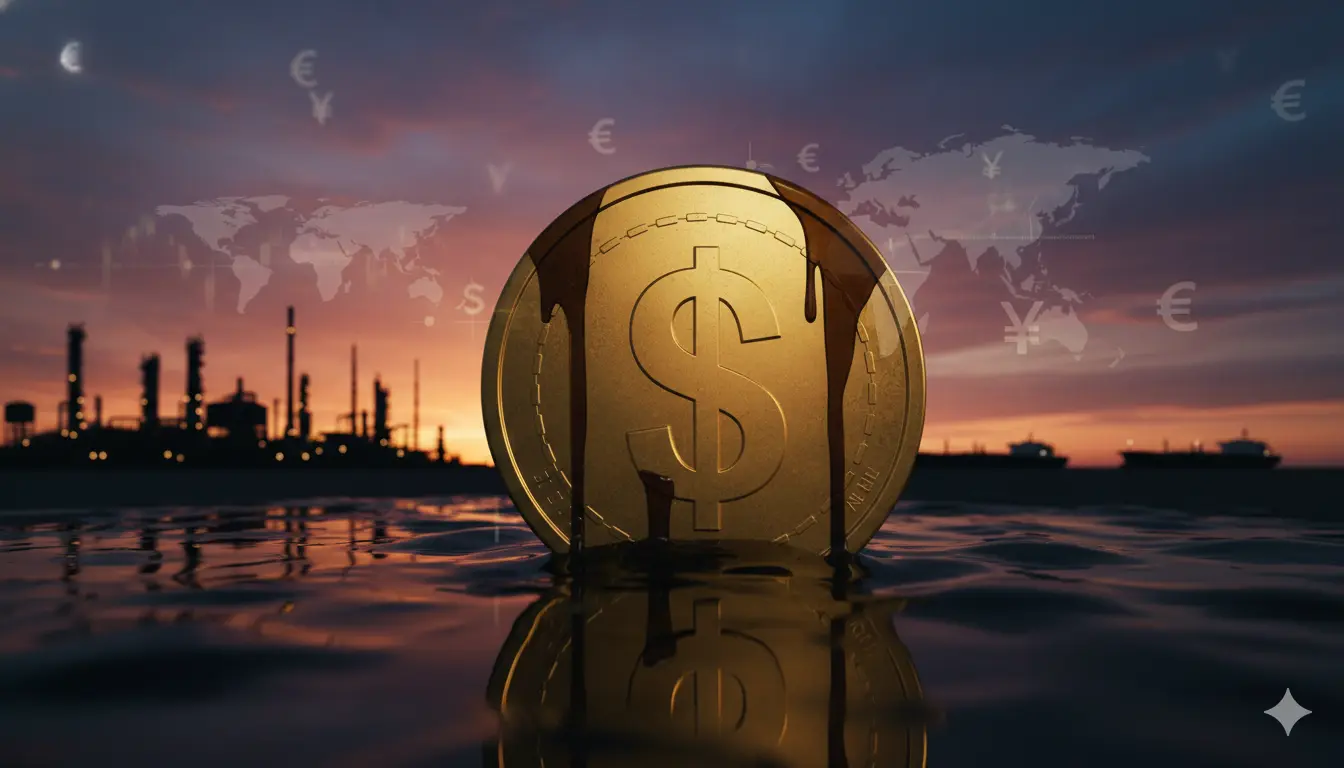
The petrodollar system has been the backbone of the global economy for the past 50 years. The future of the petrodollar system. It is a system in which oil-exporting countries sell their oil only in US dollars. The system began in the 1970s with a historic agreement between the United States and Saudi Arabia. As a result, the demand for the dollar skyrocketed in global markets, and it established itself as the world’s main reserve currency.
Simply put, any country in the world has to collect dollars to buy oil. This obligation has given the US dollar a unique power. However, many are wondering about the changes that are coming in current global politics. The future of the petrodollar system: Exactly where is it headed? In this article, we will discuss the origins of this system and its possible changes.
Iran-US War: Fierce Conflict and Military Tensions in the Middle East 2026
The establishment of the petrodollar system
When President Richard Nixon broke the dollar’s link to gold in 1971, the US economy was in turmoil. To overcome this crisis, the US made a secret agreement with Saudi Arabia in 1974. The agreement stated that Saudi Arabia would sell its oil only in dollars. In return, the US would provide Saudi Arabia with military protection and modern weapons.
There was also a condition that the dollars produced through this agreement would be reinvested in US bonds or various sectors. This is called ‘petrodollar recycling.’ As a result of this system, the United States has been able to run huge budget deficits year after year. Because the demand for dollars has always been maintained around the world. This is basically how The future of the petrodollar system It was guaranteed for decades.
Dollar dominance in world trade
Since oil is the world’s most traded commodity, it was easy to maintain the dominance of the dollar through it. Whenever any country thinks of importing energy, they have to think of their dollar reserves. As a result, the United States gets the opportunity to use its dollar as a political tool. Through sanctions or prohibitions, they can cripple the economy of any country.
Central banks around the world hold a large portion of their reserves in dollars. This is because of the dollar’s immense acceptance in international trade. But this sole dominance has long been a source of resentment among many countries. Emerging economies in particular have now started looking for alternatives to the dollar. As a result The future of the petrodollar system Now it faces a big challenge.
Petrodollar recycling and the US economy
When oil-rich countries earn billions of dollars, they don’t just keep them in the cupboard. They invest those dollars in US financial institutions or real estate. This creates an opportunity for US banks to lend cheaply. As a result, the standard of living of ordinary people in the United States improves. It works like a never-ending cycle.
Because of this system, the United States has the ability to spend more than any other country in the world. They can print as many dollars as they want, because the whole world is forced to accept those dollars. But if this cycle breaks for any reason, there is a possibility of a major collapse in the US economy. So economists around the world are now The future of the petrodollar system: Analyzing it in depth.
Reasons for the cracks in the dollar’s dominance
In recent years, countries like Russia and China have been trying to find alternatives to the dollar. The US sanctions on Russia after the war in Ukraine have accelerated this process. Russia has now started selling its oil and gas in rubles or yuan. China, the world’s largest oil importer, is also looking to trade in its own currency, the yuan.
China’s ‘petro-yuan’ is now becoming a strong competitor to the petrodollar in the global market. Many countries are now using local currencies in their bilateral trade to reduce their dependence on the dollar. The future of the petrodollar system The BRICS countries have begun to develop their own payment systems. These developments are mainly indicative of the fact that The future of the petrodollar system It may not be as well-organized as before.
Current status of Saudi Arabia
Saudi Arabia is the key player in this system, but its position is changing. Riyadh recently announced that it is in talks with China to sell oil in yuan. This is a violation of the historic agreement of decades ago. Saudi Arabia is now building alliances with new world powers to achieve its ‘Vision 2030.’ ‘ The future of the petrodollar system
Saudi Arabia’s long-standing military relationship with the United States has become strained. As a result, they no longer want to rely solely on the dollar. If Saudi Arabia starts selling oil in other currencies on a large scale, it could be a death blow for the dollar. As a result The future of the petrodollar system Now a lot depends on Saudi Arabia’s decision.
Impact of geopolitical changes
The world is now moving towards a polarization where the influence of the Western world is decreasing. The expansion of the BRICS alliance and the joining of new countries are big signals. If the countries of this alliance introduce separate currencies among themselves, the demand for the dollar will decrease significantly. According to the International Monetary Fund (IMF), the dollar reserves in the world’s central banks are gradually decreasing.
International Energy Agency or International Energy Agency (IEA) According to the data, the world’s energy demand is also changing. New countries are now considering using the barter system instead of dollars for importing energy. Such changes are mainly The future of the petrodollar system This is not just an indication of the economy but also a shift in the controlling power of global politics. The future of the petrodollar system
Renewable energy and petrodollars
The biggest long-term threat to the petrodollar is the world’s shift to renewable energy. The world is gradually reducing its dependence on fossil fuels, or oil. The increase in the use of electric cars and solar power will significantly reduce the demand for oil in the future. As demand for oil decreases, the need for petrodollars will naturally begin to decrease.
If we think about the next 20 or 30 years, we will see that the pattern of energy trade has completely changed. Then, perhaps, instead of oil, the importance of lithium or green hydrogen trade will increase. What the position of the dollar in that new energy economy will be is still uncertain. So, it can be said that the transformation of natural resources may be The future of the petrodollar system will be determined.
Fears of a dollar depreciation
If the petrodollar system collapses, the value of the US dollar will fall significantly. This could lead to inflation or a sharp increase in the price of goods in the US. It would be impossible for the US government to repay its huge debt. This would have an impact not only on America but also on stock markets and trade around the world. Because many countries have their wealth in dollars.
The collapse of the dollar means the birth of a new world order. Where no single country’s currency will be omnipresent. As a result, the importance of local currencies in different regions of the world will increase. According to many economists, the creation of a multilateral or multi-polar currency system is now the need of the hour. So we should all keep an eye on it. The future of the petrodollar system It depends on which way it turns.
The petrodollar system has provided stability to the global economy for decades. It has helped the United States maintain its supremacy on the world stage. But all systems change over time. The rise of China, Russia’s alternative path, and Saudi Arabia’s new policies all signal a major shift.
But remember, the dollar won’t disappear overnight. The world’s vast banking system and people’s trust are tied to it. But The future of the petrodollar system The challenges we face are now as clear as day. Getting the right news at the right time and getting such in-depth analysis of the global economy MKSS News