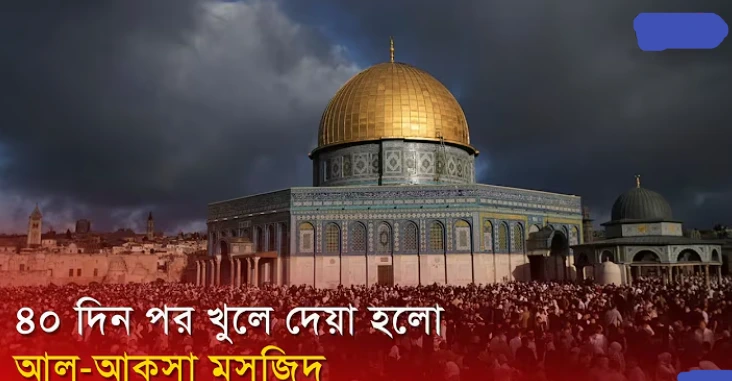
Worshippers return to Al-Aqsa: When the Gates Finally Opened
Can you imagine a silence so heavy it feels like a physical weight? For forty days, the stones of the Al-Aqsa Mosque compound seemed to hold their breath. The usual hum of devotion, the rhythmic murmurs of prayer, and the soft scuff of footsteps on ancient paving stones were replaced by a haunting silence. But that silence finally broke. This week, the air in the Old City of Jerusalem changed as worshippers returned to Al-Aqsa, flooding the holy site with a wave of emotion that is hard to put into words.
It wasn’t just about religion. It was about reclaiming a sense of self.
For those who live in the shadow of the mosque, the last forty days felt like an eternity. It’s akin to being denied access to your own home. Residents observed from their windows, their hearts heavy with longing for the daily call to prayer, the marker of the day’s beginning and end. When the word came that the restrictions were lifting, a palpable wave of relief swept across Jerusalem’s hills.
As worshippers return to Al-Aqsa, the scene is nothing short of cinematic. There’s a specific kind of light in Jerusalem during the early morning—a soft, amber glow that hits the limestone just right. On this particular morning, that light illuminated thousands of faces. Some were tear-streaked. Others were fixed in expressions of intense focus. Old men, leaning heavily on their canes, navigated the steps they’ve climbed for decades. Young children, perhaps not fully grasping the geopolitical weight of the moment but feeling the excitement nonetheless, gripped their parents’ hands.
Lebanon Ceasefire Exclusion: Why It’s a Major Crisis Point
Why does this place hold such a grip on the soul?
It’s a question that doesn’t have a simple answer. For many, Al-Aqsa is the heart of their identity. It’s a focal point of history, faith, and community. When the ban was in place, it felt as though a vital organ had stopped beating. Now, with the gates swinging open, the pulse is back. The sheer volume of people was staggering. Thousands. Worshippers return to Al-Aqsa
The atmosphere was electric, yet strangely serene. You’d think a crowd that size would be chaotic. It wasn’t. There was a shared understanding, a quiet dignity in the way people moved. As worshippers return to Al-Aqsa, they aren’t just looking for a place to pray; they are looking for a sense of peace that has been absent for over a month. Of course, the backdrop to all of this is incredibly complex. According to reports by the BBC, Worshippers return to Al-Aqsa
The security situation remains a delicate dance of policy and ground-level reality. Every gate is a checkpoint; every movement is watched. Yet, for a few hours during the midday prayer, the focus shifted away from the conflict and toward the divine. Worshippers return to Al-Aqsa
I remember talking to an elderly woman near the Damascus Gate a few years ago. She told me that for her, the mosque wasn’t just a building; it was a sanctuary from the hardships of daily life. “When I am inside,” she said, “the world outside disappears.” That sentiment was written on a thousand faces this week. When worshippers return to Al-Aqsa, they leave the noise of the world at the door.
But let’s talk about the logistics for a second. It wasn’t exactly a free-for-all. There were still significant hurdles. Even so, the sheer determination of the people was undeniable. They waited in long lines. They endured rigorous checks. They did it all because the pull of the sanctuary is stronger than the fear of the struggle.
It’s a question that lingers: what truly defines a “home”?
Is it where you sleep, or is it the place where your spirit feels most at rest? For many in this part of the world, Al-Aqsa is that spiritual home. The forty days of closure were a period of displacement, even for those who never left their neighborhoods.
Seeing worshippers return to Al-Aqsa is a reminder of the resilience of the human spirit. People have a remarkable ability to endure, to wait, and to hope. You could see it in the way they greeted one another. Total strangers were exchanging “Salam” with a depth of meaning that usually only exists between old friends. They were all part of the same story that day—a story of return.
The prayers themselves were powerful. When thousands of people bow in unison, the sound of their movement is like a soft wind rushing through a forest. It’s a sound that stays with you. The imam’s voice, amplified across the courtyard, carried a weight of responsibility. He wasn’t just leading a prayer; he was articulating the hopes of a community that has been through the wringer.
Some might argue that it’s just a mosque. Just stone and mortar. But tell that to the man who spent the last forty days praying on a sidewalk because he wasn’t allowed inside. Tell that to the families who have walked these paths for generations. As worshippers return to Al-Aqsa, the “stone and mortar” argument falls apart. The building is a vessel for something much larger.
There’s a specific rhythm to life in the Old City. The shops, the smells of spices and fresh bread, the calls of vendors—it all revolves around the prayer times. When the mosque was closed to the public, that rhythm was broken. The shopkeepers in the souks felt it too. Their business isn’t just about selling goods; it’s about the flow of people. Now that worshippers return to Al-Aqsa, the souks are beginning to wake up again.
There is movement. There is life.
Is the situation perfect? Hardly so. The underlying issues haven’t vanished into thin air. But for a moment, the focus was on something else. It was an act of faith. It was the right to exist and pray in a space that holds immense meaning.
Watching the crowds disperse after the prayer was just as moving as watching them arrive.
There was no rush to leave. People lingered in the courtyards, sitting under the olive trees, talking in low voices. They wanted to soak it in. They wanted to make sure it was real. As worshippers return to Al-Aqsa, they bring with them a renewed sense of purpose.
Think about the sheer logistics of a 40-day ban. That’s nearly six weeks. Think of the Fridays that passed in silence. Friday is the pinnacle of the week for Muslims, a time of congregational prayer and community. Missing one is hard. Missing six is a trauma. That’s why the energy this week was so high. Worshippers return to Al-Aqsa
It was a release of pent-up spiritual energy.