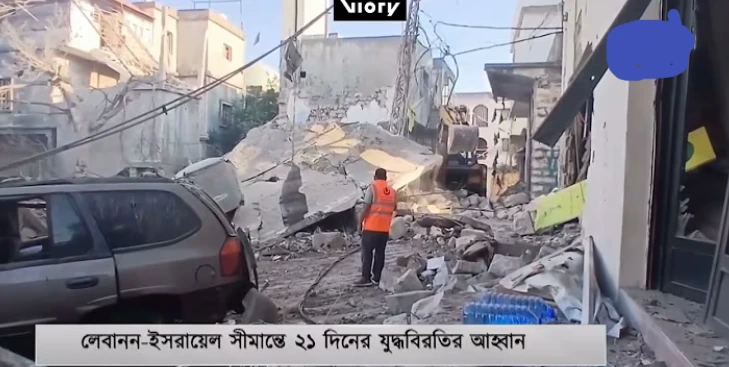
The Ghost at the Table: Why the Lebanon Ceasefire Exclusion is No Accident
I remember sitting in a small café in Mar Mikhael a few years back, the kind of place where the espresso is thick enough to hold up a spoon and the conversation is always about the “next thing” that might break. In Lebanon, you live in the shadow of the “next thing.” Right now, that shadow is cast by the devastating conflict in Gaza, yet as diplomatic tables are set in Cairo and Doha, there is a glaring, empty chair.
Why? Why does the talk of peace stop at the border of the Sinai? The Lebanon ceasefire exclusion isn’t just a clerical error in a diplomatic draft; it is a calculated, messy, and deeply frustrating reality of modern Middle Eastern geopolitics.
The “Unity of Fronts” Trap
When the current escalation began, Hezbollah declared it was a “support front.” The idea was simple: as long as Gaza is under fire, the northern border of Israel will stay hot. It sounds like a solid strategic alliance on paper, but in the world of high-stakes diplomacy, it created a structural nightmare. By linking their fate so tightly to Hamas, Hezbollah effectively handed the keys of Lebanese peace to a group in a tunnel hundreds of miles away.
But here is the kicker. While Hezbollah linked the fronts, the international mediators did the exact opposite. They decoupled them. The Lebanon ceasefire exclusion became a necessity for negotiators who realized that trying to solve the riddle of Gaza and the enigma of the Blue Line at the same time was like trying to defuse two different bombs with one pair of pliers. It just wasn’t going to happen.
Kuwaiti drone attack sets oil pump on fire: New concerns over Middle East energy crisis
Different Doctors, Different Medicine
Have you ever wondered why we see different faces in the news when Lebanon is mentioned compared to Gaza? That’s because the tracks are entirely separate. The Gaza talks are a heavy-lift operation involving Egypt, Qatar, and the U.S. intelligence community. It’s about hostages, humanitarian corridors, and the governance of a tiny, besieged strip of land.
On the other hand, the Lebanese front has been the pet project of Amos Hochstein, the U.S. envoy, and various French diplomats. They aren’t talking about hostages. They are talking about Resolution 1701, the withdrawal of armed forces from the border, and land disputes that date back decades. Because the issues are so fundamentally different, the Lebanon Ceasefire Exclusion was baked into the process from day one. You can’t treat a broken leg with heart medication.
The Israeli Perspective: A Different Kind of Threat
From the Israeli side, the northern border isn’t just another front; it’s a “clear and present danger” of a different magnitude. While Hamas’s capabilities are devastating, Hezbollah is a formal army with an arsenal that could turn the lights out across the entire Mediterranean coast.
For the Israeli government, a ceasefire in Gaza doesn’t automatically mean they feel safe enough to send 80,000 displaced citizens back to their homes in the north. They want a separate, iron-clad guarantee that the Radwan Forces won’t be sitting on their porch. This demand for specific, localized security measures is a primary driver of the Lebanon Ceasefire Exclusion. They don’t want a “bundle deal” if the bundle is flimsy.
The Human Cost of Being an Afterthought
The drones hum. Day and night. It’s a sound that crawls under your skin and refuses to leave, a mechanical mosquito that might, at any moment, turn into a fireball. While the world watches the agony of Gaza—rightly so—the hills of South Lebanon burn in a parallel, yet strangely isolated, tragedy.
I spoke to a friend from Tyre recently. He asked me a question that stuck: “Are we just the overflow?” If they stop the war there, do they just keep practicing on us?” This fear is the direct result of the Lebanon ceasefire exclusion. When you aren’t part of the primary plan, you become a secondary target. You become “collateral” in a negotiation that doesn’t even have your name on the folder.
The Role of Iran and the Regional Chessboard
We can’t talk about this without mentioning Tehran. For Iran, Lebanon is the crown jewel of the “Axis of Resistance.” Hezbollah is their most potent deterrent against a direct strike on Iranian soil. Therefore, any ceasefire involving Lebanon carries much higher stakes for regional power dynamics than a ceasefire in Gaza.
The Lebanon Ceasefire Exclusion might actually suit certain regional players. It keeps Lebanon as a “pressure valve” that can be turned up or down depending on how the broader negotiations with the West are going. It’s cynical. It’s exhausting. And it leaves millions of Lebanese people wondering if they are merely pawns in a game played by men in air-conditioned rooms in far-off capitals.
Why the World Looks Away
Is it possible the international community just has “crisis fatigue”? Maybe. According to reports from Al Jazeera, the humanitarian situation in Lebanon is spiraling, yet the diplomatic urgency remains focused elsewhere. The Lebanon Ceasefire Exclusion is partly a product of a world that can only handle one headline at a time.
When the news cycle is dominated by the horror of famine and bombardment in Gaza, the “low-intensity” (a term I loathe, because there is nothing low-intensity about a missile hitting your neighbor’s house) conflict in Lebanon gets pushed to the back pages. But “low-intensity” can turn into a full-scale regional conflagration in the blink of an eye.
The Danger of the Vacuum
What happens if a Gaza deal is finally signed and the Lebanon ceasefire exclusion remains in place? This is the nightmare scenario. Hezbollah has said they will stop when Gaza stops. But if Israel decides that “stopping” isn’t enough—that they need a total retreat of Hezbollah forces—then the silence in Gaza could be the starting whistle for a full-scale war in Lebanon.
The Lebanon ceasefire exclusion creates a dangerous vacuum where miscalculations are almost inevitable. Without a synchronized diplomatic off-ramp, we are essentially betting on the restraint of two sides that have very little reason to trust one another. Does that sound like a winning bet to you?
Looking for a Way Out
So, how do we fix the Lebanon ceasefire exclusion? It requires a level of diplomatic agility we haven’t seen in years. It requires treating Lebanon not as a “support front” or a “secondary theater,” but as a sovereign entity with its own right to security and peace.
We need a bridge. A bridge between the Doha talks and the Hochstein missions. Without that, the Lebanon Ceasefire Exclusion will continue to leave a nation of six million people dangling by a thread, waiting for a peace that was never written for them.
The Final Verdict
In the end, Lebanon was left out because it’s complicated. Because it’s scary. Because it involves more moving parts than a Swiss watch. But ignoring a fire in the kitchen because you’re busy putting out a fire in the living room is a great way to lose the whole house.
The Lebanon ceasefire exclusion is a gamble. The diplomats are betting they can solve the “big one” first and then handle the “small one.” But in the Middle East, there are no small fires. There are only fires that haven’t reached the fuel tank yet.
Will we look back and see the Lebanon Ceasefire Exclusion as the moment we missed the chance to prevent a wider war? I hope not. But as I sit here, thinking of the quiet streets of Beirut and the smoke over the southern olive groves, I can’t help but feel that leaving Lebanon out of the plan was the biggest mistake of all. Peace shouldn’t be a luxury for some; it should be a requirement for all. Why was Lebanon left out? Because it was easier. And in diplomacy, “easier” is rarely “better.”