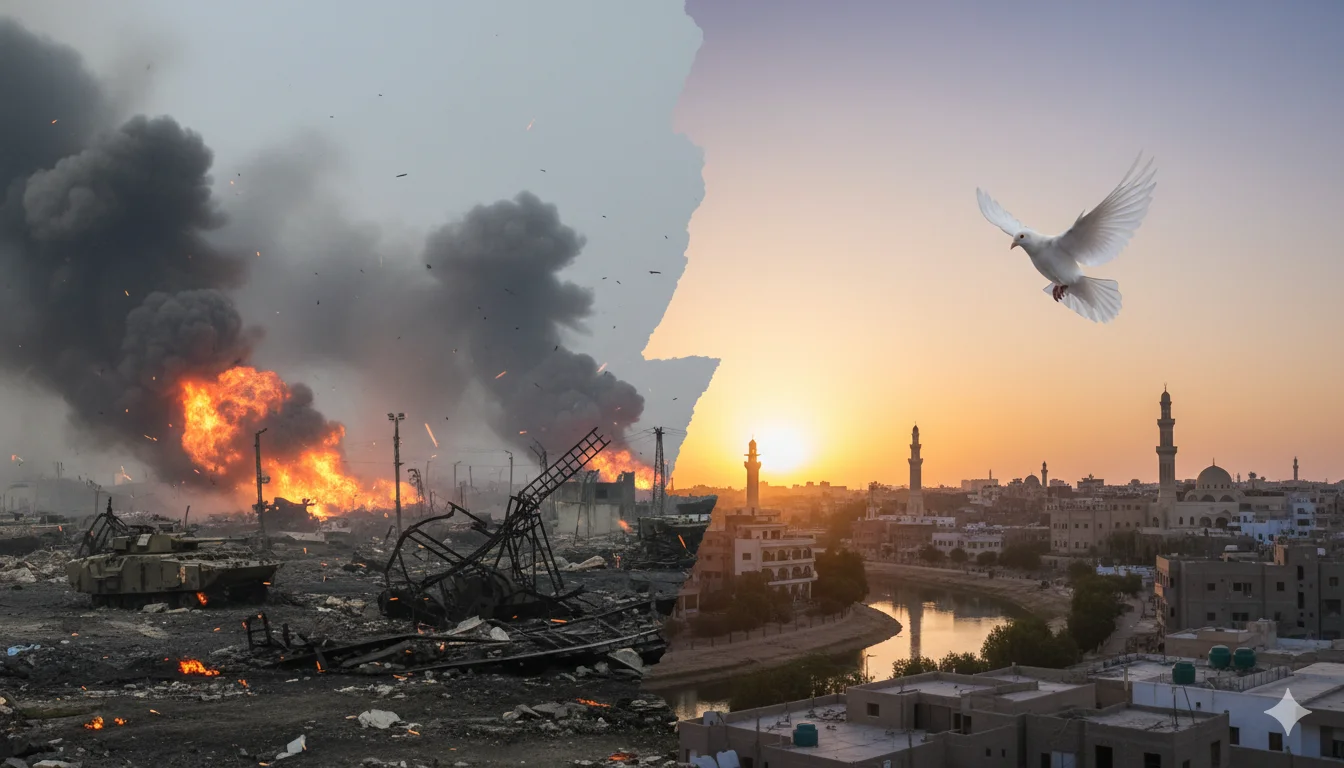
Analyzing of the impact and tensions of the 40-day Iran-US conflict, The geopolitics of the Middle East have recently gone through their most volatile period in decades. It is clear that this conflict brought the world to the brink of a devastating regional war. When this shadow war between Tehran and Washington, which lasted for 40 consecutive days, turned into a direct conflict, its impact was not limited to the military sphere but also shook the foundations of the global economy and security.
The beginning of the conflict: how the sparks spread
No conflict starts suddenly. A review of the Analyzing of the impact and tensions of the 40-day Iran-US conflict shows that tensions began to rise when Iran announced “extreme retaliation” in response to a series of attacks on diplomatic and military installations. In response, the US deployed its aircraft carriers to the Mediterranean and Red Seas. This 40-day cycle was essentially an extreme battle of outdoing each other, with neither side willing to back down first.
Financial losses: Billions of dollars wasted
The biggest aspect of this conflict is its economic shock. According to an Analyzing of the impact and tensions of the 40-day Iran-US conflict, even a country with a powerful economy like the United States has had to spend a huge amount of money in these 40 days. According to a Pentagon report, the United States has spent more than $2 billion on additional troop deployments.
logistics, and fuel in the Middle East. On the other hand, Iran’s economy, which was already under the pressure of sanctions, has suffered even greater losses. As it mobilizes its ‘Axis of Resistance’ or regional allies and prepares for internal defense, the value of the Iranian currency (rial) has fallen by another 15% in the informal market. According to international analysts, the regional economic loss due to the disruption of the Red Sea trade route has exceeded $10 billion.
Arms race: The ultimate exercise in technology
The report, which Analyzing of the impact and tensions of the 40-day Iran-US conflict, shows that both sides have unleashed their arsenals of modern lethal weapons in these 40 days.
1. Iran’s arsenal: Tehran has deployed hundreds of Shahed-136 suicide drones and Fatah hypersonic missiles. While each drone costs between $20,000 and $50,000, ballistic missiles cost millions of dollars. Iran spent about $150 million on weapons in just one major night of attacks.
2. Defense of America and its allies: Defense was more expensive than attack. The US Navy used SM-3 interceptors to destroy each incoming drone or missile, each of which cost about $9 million. Over the course of the 40 days, the US and its allies spent $1.2 billion on defensive ammunition alone.
What was destroyed?
Damage to military and strategic installations is a major part of this war. According to anAnalyzing of the impact and tensions of the 40-day Iran-US conflict, several pro-Iranian command centers in Syria and Iraq have been razed to the ground by US-led strikes. In contrast, several US logistics hubs and intelligence centers have been damaged by drone strikes. Satellite images show that several oil refineries and transport ships have also suffered extensive damage in the conflict.
Humanitarian disaster and casualties
We must not forget the human suffering behind the machines and technology. An Analyzing of the impact and tensions of the 40-day Iran-US conflict shows that while direct military casualties have been kept under wraps to avoid a full-scale war, dozens of military personnel and contractors have been killed in proxy wars. The civilian population of Iraq, Syria, and Lebanon has borne the brunt of the conflict. Thousands have fled their homes, and the prices of essential goods have skyrocketed.
Win-lose: Geopolitical assessment
Who is really winning this war? Our Analyzing of the impact and tensions of the 40-day Iran-US conflict suggests that neither side has truly won.
- Iran has proven that it has the ability to penetrate the sophisticated defenses of the Western world.
- The United States has shown how quickly its multinational defense alliance can be activated.
- But at the end of the day, the regional economy and the common people were the main losers in this war.
Long-term impact and future
Even though this conflict is over, its effects will remain for many years. It is clear from the Analyzing of the impact and tensions of the 40-day of the Iran-US conflict that the United States is now reconsidering its permanent presence in the Middle East. On the other hand, Iran is increasing its investment in its missile technology. These 40 days were essentially a ‘live test’ of modern warfare, where drones and electronic warfare have become more dominant than conventional warfare.
In conclusion, theAnalyzing of the impact and tensions of the 40-day of the Iran-US conflict reminds us that the cost of war cannot be measured in money alone; its human and social cost is much higher. In order to maintain stability in the Middle East, it is necessary to reduce the rattle of weapons and find solutions at the negotiating table.
The insecurity of important trade routes such as the Red Sea and the Strait of Hormuz as a result of this conflict is a bad sign for the global economy. According to reports by international media outlets such as Reuters and Al Jazeera, this tension could flare up again at any time.
Therefore,
The Analyzing of the impact and tensions of the 40-day of the Iran-US conflict is not just a report, but it is a warning to world leaders. The need of the hour is to avoid the path of war and walk the path of peace.
Analyzing of the impact and tensions of the 40-day Iran-US conflict: Learn in this report the huge financial toll of the war, the cost of weapons, and the story
Red More: America’s Israel Policy: Internal Crisis and Youth Revolt