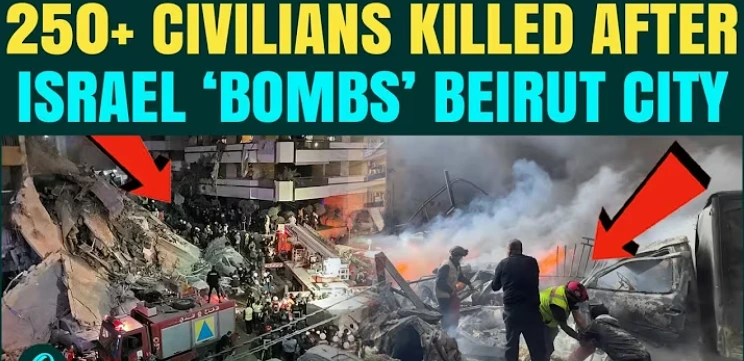
This morning, I sat with my coffee, watching the steam rise, as the latest Lebanon-Israel conflict news flickered across my screen. Two hundred and three. That’s the count. Two hundred and three souls gone in a flash of heat and steel. It’s a statistic that feels impossible to digest before the sun has even fully climbed the sky.
I remember talking to a friend who grew up in the Bekaa Valley. He used to tell me about the olive groves and the way the light hit the mountains at dusk. For him, the news isn’t just a headline; it’s a map of his childhood being rewritten by fire. When we see reports regarding the Lebanon-Israel Conflict News, we often forget that under the smoke, there are kitchens where dinner was being prepped, bedrooms where children were sleeping, and streets where neighbors were just… living.
Worshippers return to Al-Aqsa: Thousands pray after 40-day ban
The report of 203 deaths in a single day of Israeli attacks marks a grim milestone in an already bloody chapter. It’s a staggering jump. Why now? Why is this intensity? The world watches the screen, scrolling through social media feeds, finding Lebanon-Israel conflict news sandwiched between vacation photos and recipe videos. It makes me wonder: have we become numb? Or is the horror so vast that our brains simply refuse to process the reality of it?
The air in Beirut is heavy right now. I haven’t been there in years, but I can almost taste the dust and the metallic tang of fear that hangs in the atmosphere whenever this Lebanon-Israel conflict news takes a turn for the worse. The infrastructure is buckling. Hospitals, already struggling under the weight of an economic crisis that has plagued the nation for years, are now overflowing. Imagine being a surgeon in one of those wards.
You aren’t just fighting death; you’re fighting the clock, the lack of supplies, and the crushing exhaustion of a war that seems to have no exit ramp. It wasn’t supposed to be like this. Every time a ceasefire is whispered about, another strike shatters the hope. People are fleeing. They pack their lives into the back of dusty cars—photos, a favorite blanket, maybe some jewelry hidden in a sock—and they drive. But where do you go when the sky itself feels like an enemy?
This Lebanon-Israel conflict news isn’t just about military strategy or geopolitical chess moves. It is about the fundamental loss of “home.” I often think about the silence that follows a blast. It’s not a peaceful silence. It’s a ringing, hollow void where a building used to be. The rescue workers, the White Helmets of this era, dig with their bare hands. They aren’t looking for political victories; they’re looking for a pulse.
Every time I read the Lebanon-Israel conflict news, I look for those stories—the small human triumphs amidst the wreckage. But today, the sheer volume of the loss—203 people—drowns out the whispers of survival.
What is the cost of a border? Is it worth the lineage of an entire family wiped out in an afternoon? These are the questions that keep me up at night.
The geopolitical analysts will talk about “strategic depth” and “deterrence.” They use cold, hard language to describe the hot, red reality of the ground. But related Lebanon-Israel conflict news should always be viewed through a lens of human cost. If we lose that, we’ve lost our own humanity.
According to reports from Al Jazeera, the scale of these attacks is some of the most intense we’ve seen in decades. It isn’t just a skirmish anymore; it’s a full-scale humanitarian catastrophe. When you’re updating Lebanon-Israel Conflict News, you realize that the timeline is no longer measured in weeks or months but in heartbeats and explosions.
I remember a shopkeeper I met once in a small town outside Sidon. He sold the most incredible honey.
He told me that bees don’t understand borders; they just go where the flowers are. I think about him today. I wonder if his shop is still there. I wonder if he’s among the 203. This specific Lebanon-Israel conflict news makes you realize how fragile our little worlds are. We build lives, we plant gardens, we tell stories, and all of it can be undone by a decision made in a room hundreds of miles away.
The international community watches. Statements are issued. Words like “concern” and “de-escalation” are tossed around like confetti at a funeral. They feel empty. Does a mother in Lebanon care about a “strongly worded statement” when she’s looking for her son in the rubble? The impactful Lebanon-Israel conflict news we receive daily should be a call to action, yet it often feels like a witness to an inevitable tragedy.
The cycle of violence is a hungry beast. It eats the young and the old alike. It doesn’t discriminate based on your dreams or your potential. In the daily Lebanon-Israel Conflict News, we see the collateral damage of a feud that stretches back further than many of the victims have been alive. It is a legacy of trauma being handed down like a bitter inheritance.
Yesterday, I saw a photo of a young girl holding a cat amidst a ruined street. Her face wasn’t crying; she just looked tired. That’s the mosts haunting part of the exhaustion.
The people of Lebanon are tired of being resilient. They want to be bored. They want to worry about the price of bread or the weather, not the sound of a drone overhead. But the global Lebanon-Israel conflict news keeps bringing them back to this nightmare. Is there a way out? History says yes, eventually. But at what price? If we reach peace only after every city is a graveyard, is it truly a victory? The ending Lebanon-Israel conflict news of this particular cycle hasn’t been written yet, but the ink is already being diluted by the tears of thousands.
We owe it to those 203 people to not just turn the page. We owe it to them to remember that they were people. They had favorite songs. They had annoying habits. They were loved. As the Lebanon-Israel conflict news continues to evolve, let’s try to keep that in mind. Let’s refuse to let them become just another digit in a news crawler.
The sun will set over Lebanon again tonight. For some, it will be the first night of a long, agonizing grief. For others, it will be a night spent huddled in a shelter, praying the ceiling holds. And for 203 people, there will be no more sunsets. That is the reality we have to sit with. No fancy words or political justifications can change the cold, hard fact that 203 lives ended today. And that is a weight we all should carry, even if just for a moment.