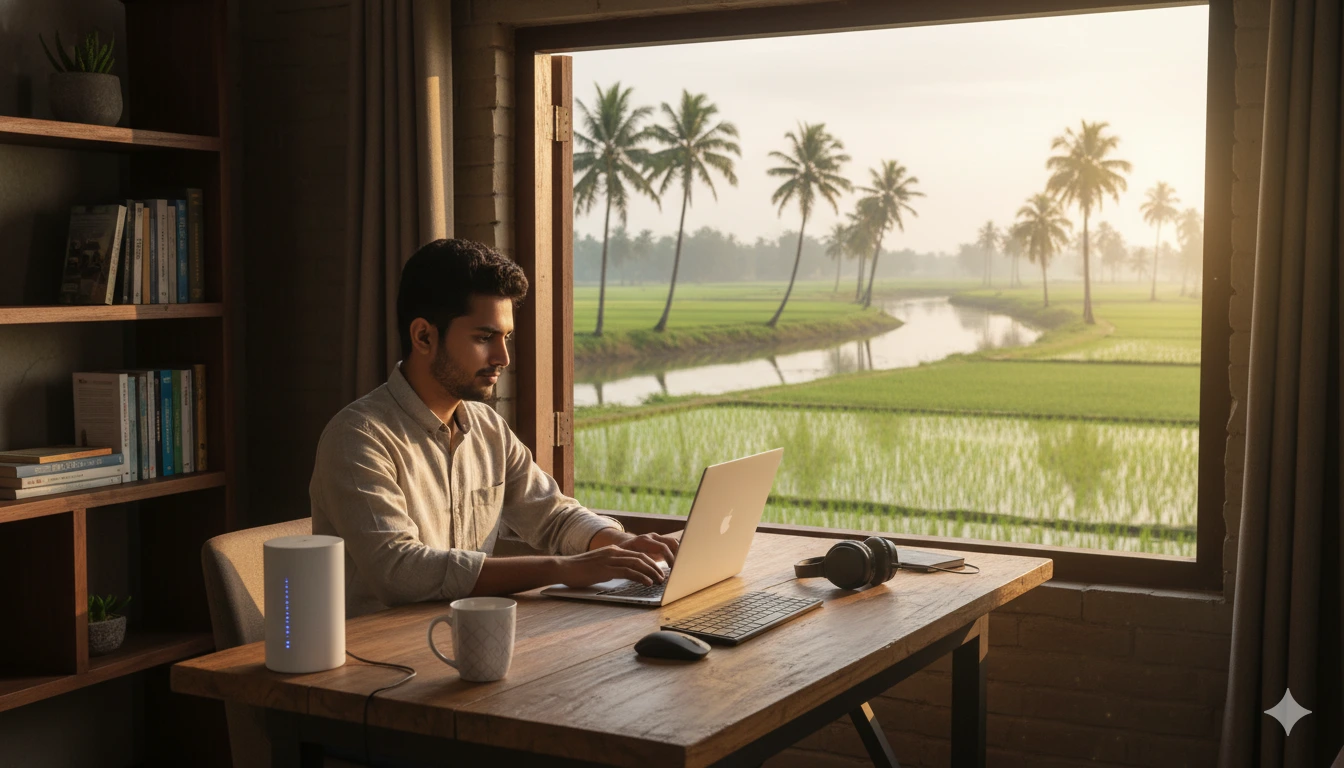
It was once thought that a successful career meant living in a big city like Motijheel, Karwan Bazar, or Silicon Valley in Dhaka. But that perception is changing dramatically. In the past few years, we have been witnessing a new social and economic transformation, which experts call ‘reverse urbanization.’ And the main driving force behind this change is remote work and reverse urbanization. This combination of.
This shift from cities to villages is not just a temporary change but is changing the face of the rural economy. In today’s article, we will discuss how this culture of working from home is reviving our neglected rural areas.
What is reverse urbanization?
Generally, the migration of people from rural areas to cities in search of a better life and work is called urbanization. But when people leave the cities and return to villages or small towns and conduct their professional lives from there, it is called reverse urbanization. In the present era, with the ease of access to the internet and the increasing opportunities for remote work in the corporate world, remote work and reverse urbanization They have become complementary to each other.
New flow of money into the rural economy
Earlier, talented youth from the village used to go to the city to earn money and send a small part of that money back to the village. But now the picture is different. A software engineer or a digital marketer is now working for his foreign client or city office from the village. As a result, a large amount of salary from the city is now being spent directly on the rural market.
When a high-ranking official starts living in a village, his daily needs also change. He is shopping from the local market, renovating his house with the help of local craftsmen. This is the decentralization of money. Remote work and reverse urbanization The biggest positive aspect of this is that it is increasing the income of local small traders and creating a new momentum in the rural economy.
AI algorithmic inequality and the global wealth gap 2026
Infrastructure development and technology expansion
This trend of people returning to the countryside is directly impacting infrastructure development. High-speed internet is no longer just a luxury in the city; it has now become an essential part of rural life. In many areas, broadband connectivity is now reaching only because of the demand of these remote workers.
This technological development is not only benefiting the workers but also helping local farmers. With the help of the internet, farmers can now send their products directly to the city through e-commerce. This is how remote work and reverse urbanization Strengthening the rural digital ecosystem globally,change is the World Bank. Their various reports have highlighted the importance of the World Bank’s making this change around the world.
Quality of life and social change
People are now seeking peace and quiet to escape the hustle and bustle of the city, traffic jams, and pollution. Returning to the countryside is improving people’s quality of life. Spending time with family and access to clean air and unadulterated food is improving people’s mental and physical health.
Socially, its impact is also far-reaching. When educated and skilled manpower returns to the villages, they are participating in local social activities. They are taking the lead in improving the quality of village schools or solving small local problems. This intellectual practice Remote work and reverse urbanization Through this, the rural social system is being made modern and aware.
Local employment creation
Reverse urbanization is not just the return of a single person; it is a chain reaction of new job creation. When a remote worker works from the village, he needs computer repairmen, logistics services, or home delivery services as supporting staff. As a result, new job opportunities are being created for local youth. In many places, it is seen that young people returning from big cities are creating small ‘co-working spaces,’ which provide opportunities for freelancing in the village. Basically Remote work and reverse urbanization As a result, today it is possible to work in the global market even from a village tea shop.
Environmental impact
When the population pressure on the city decreases, it becomes easier to maintain the environmental balance. Dhaka and other megacities are now burdened with population. This pressure is decreasing to some extent due to reverse urbanization. When people start living in scattered areas, waste management and balanced distribution of resources become easier. For sustainable development Remote work and reverse urbanization Could be a very effective model.
Challenges and overcoming
Despite these positive aspects, some challenges remain. The stability of uninterrupted power supply and high-speed internet is still a major problem in many villages. In addition, the limitations of rural banking services and courier services also cause some suffering to remote workers. However, if the government and private organizations work on this infrastructure, Remote work and reverse urbanization The process will be further accelerated.
In this technological age, there is no alternative to skill development. If a person is skilled, then location cannot be a barrier in his work. This is the simple truth. Remote work and reverse urbanization Establishing the concept.
The future rural economy
In the next 10 years, we may see a village where all the modern civic amenities are present, but the softness of nature is not lost. This culture of remote work is not just a trend; it is a permanent change. People are now realizing that being physically present in a congested city is not necessary to be successful.
In this new economic structure, villages will no longer be dependent on agriculture alone. Rural areas will get their money from information technology, freelancing, and digital services. And this whole revolution is becoming possible. Remote work and reverse urbanization Through its successful application.
In conclusion, reverse urbanization has been a blessing for our economy. It is a golden opportunity to modernize villages by reducing the inhumane pressure of people from the cities. Remote work and reverse urbanization Not only economic liberation, but it also shows the way to building a sustainable and balanced society. If we can utilize this opportunity to further improve rural infrastructure, our villages will soon become the main hub of the modern economy.
We must remember that if we know how to use technology properly, the whole world is now at our fingertips. And this knowledge Remote work and reverse urbanization Its core power is what will change the world of tomorrow.